
.png)
27/04/26
BYOD: What It Is, Benefits, Risks, and How to Implement It Legally in Your Company
— Ana Lambert
In the last decade, the boundary between personal and professional tools has blurred. For companies with large workforces of "deskless" workers (operators, drivers, sales clerks or healthcare workers), providing each employee with a corporate smartphone is an unaffordable investment in hardware and maintenance.
This is where the BYOD (Bring Your Own Device) concept comes in. But is it as simple as letting everyone use their own cell phone? No. Without a clear strategy, BYOD can become a legal and security nightmare. In this guide we explore how to turn this practice into a competitive advantage.
What is BYOD?
BYOD stands for Bring Your Own Device. It refers to the corporate policy that allows employees to use their personal devices (smartphones, tablets or laptops) to access company resources, communicate with their teams and manage work tasks.
For sectors such as construction or retail, BYOD is not a luxury, but an operational necessity. 80% of the global workforce does not work in front of a PC; their only digital "window" is the cell phone in their pocket.
Benefits: Why adopt BYOD?
Adopting a well-structured BYOD policy offers tangible benefits for both the organization and the worker:
- Dramatic cost savings: The company eliminates device purchases, mobile line contracts and hardware support.
- Immediate adoption: The employee already knows how to use his or her device. There is no learning curve, which facilitates the implementation of new communication or management tools.
- Operational agility: Communication reaches the employee wherever he/she is, without having to go to an office or consult a physical board.
- Convenience for the employee: Avoids the employee having to carry two devices, something especially uncomfortable in jobs of constant mobility.
Critical risks: What can go wrong
Uncontrolled use of personal devices creates three main risks that no company should ignore:
A. Shadow IT and Data Leakage
When there is no official tool, teams install apps on their own (WhatsApp, Telegram, personal Dropbox). This is known as Shadow IT. The company loses control over sensitive information (customer lists, work plans, payroll), which is stored in private clouds outside the company's control.
B. The challenge of the GDPR
The General Data Protection Regulation is strict. If a company mandates or permits the use of personal cell phones for work, it must ensure that company and employee data are separated. In addition, a middle manager should not have access to the personal phone number of his subordinates just to be able to send them a shift, as this violates the employee's privacy.
C. The Right to Digital Disconnection
This is the biggest legal risk in Spain and the EU. The use of personal apps for work (such as WhatsApp) makes it almost impossible for the worker to disconnect. Receiving a message from a boss at 10 o'clock at night on the same app where you talk to your family is a labor infringement that can lead to serious penalties for the company.
How to implement BYOD with legal guarantees
For BYOD to be a success, it is necessary to move from "informality" to "digital formality". Here are the steps for a secure implementation:
Step 1: Choose the right technology (The Ommnio factor).
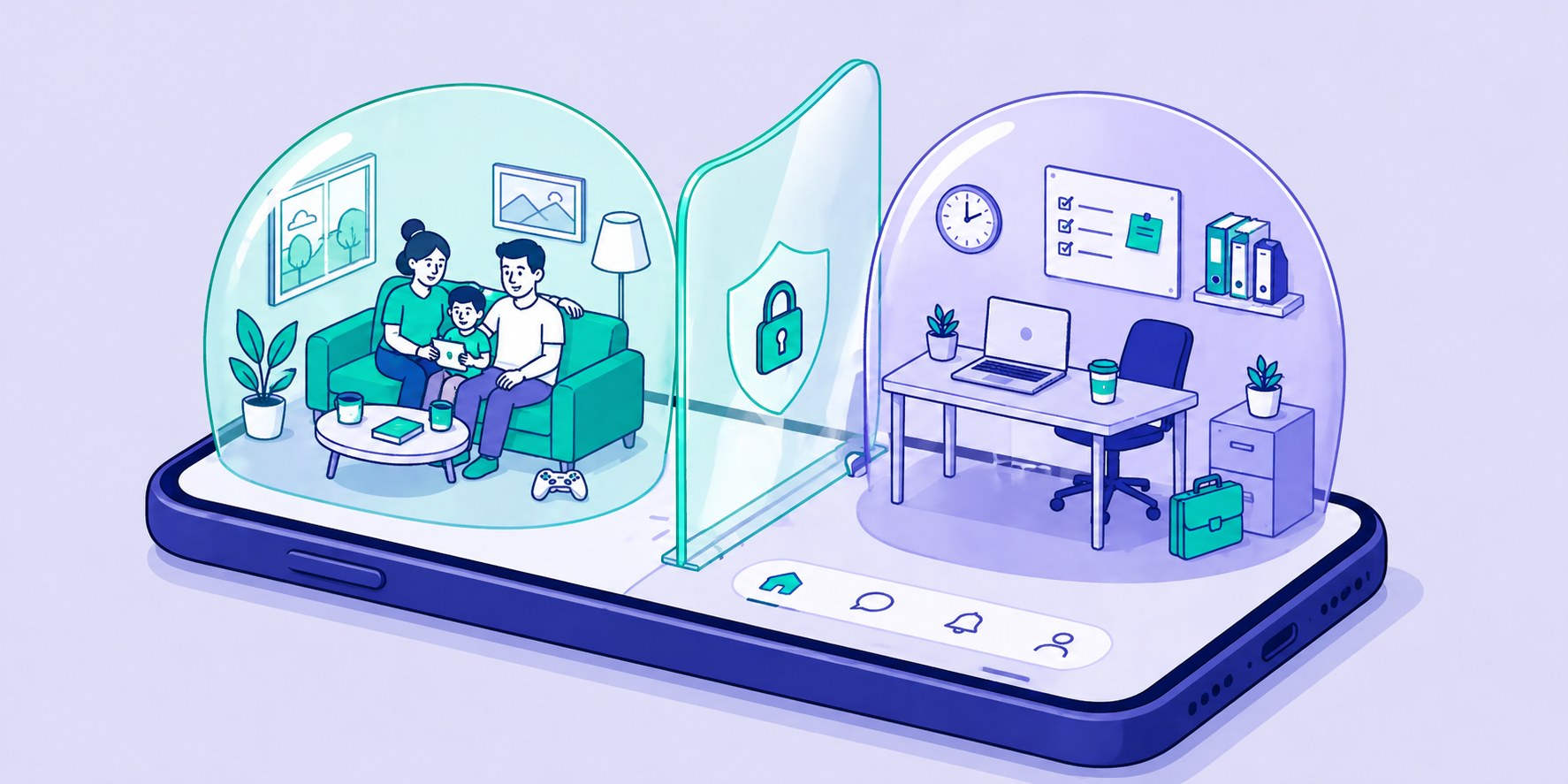
The key to legal BYOD is isolation. You need a platform that works on the personal mobile but is a watertight container.
- No personal data: Registration should not require the employee's phone number (use of QR codes).
- Schedule control: The tool should allow scheduling "silence" of notifications outside working hours.
- Remote deletion of professional data: If the employee leaves the company, the administrator should be able to revoke access to documents and chats without touching their personal photos or messages.
Step 2: Create a Device Usage Policy
It is not enough to say "use this app". There must be a signed document specifying:
- Which apps are authorized.
- That the use of the device is voluntary (or compensated according to agreement).
- The company's commitment to never access the private sphere of the employee's cell phone.
Step 3: Training and Awareness
Explain to employees that professional BYOD (via a corporate app) is actually a protection for them. By using an official channel, their personal data is safe and their break time is respected, which is not the case if they stay on informal channels.
A BYOD "Practical Policy" for your company
If you have employees without corporate mail, your BYOD policy should boil down to these points:
- Exclusive Channel: All work contact shall be made through the official [App Name] platform. The use of personal social networks for professional purposes is prohibited.
- Guaranteed Privacy: The company will not have access to the geolocation, photos, personal messages or contacts of the employee's device.
- Disconnection: The notification system will be automatically deactivated outside the employee's shift hours. No response is expected to any message outside these hours.
- Termination of Employment: In case of termination of employment, the company will deactivate access to the corporate account, removing all confidential information from the device remotely.
BYOD is the most efficient way to digitize front-line workers, but it requires a solid ethical and legal foundation. Companies that ignore these risks expose themselves to fines and a toxic work climate. Those that, like those that rely on Ommnio, bet on tools that respect privacy and rest, achieve a more connected, productive and, above all, loyal workforce.
Is your company ready to make the leap to BYOD in a professional way? It's time to leave WhatsApp groups behind and regain control of your operational communication.